
What is a Rotary Damper?
by Zola Zhao/May 11, 2024
A rotary damper is a rotational device to decelerate an objective’s movement, either rotary or linear movment.
Rotary dampers are capable of generating significant resistance or torque, effectively controlling motion in mechanical systems.

Vane Damper
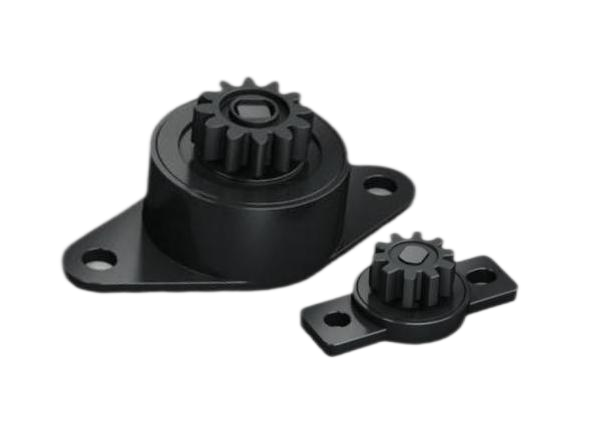
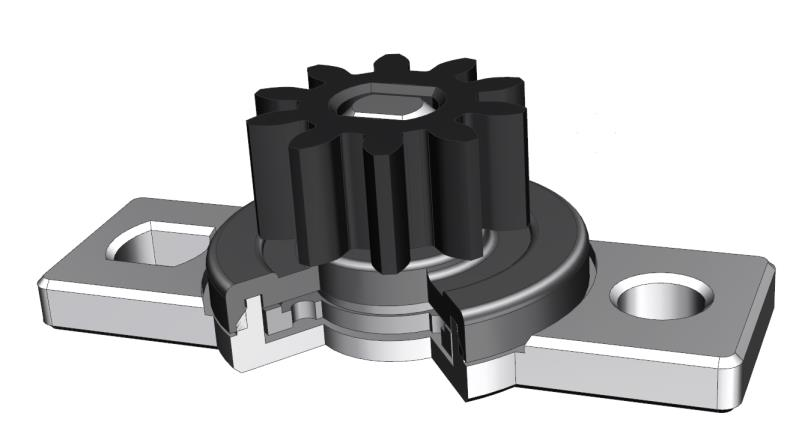
Gear Damper
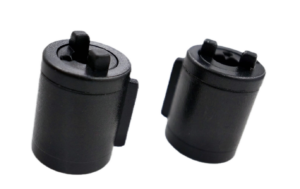
Barrel Damper
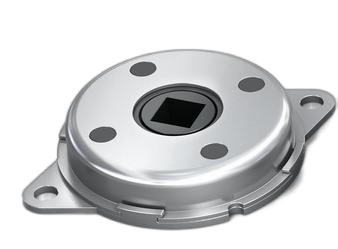
Disk Damper
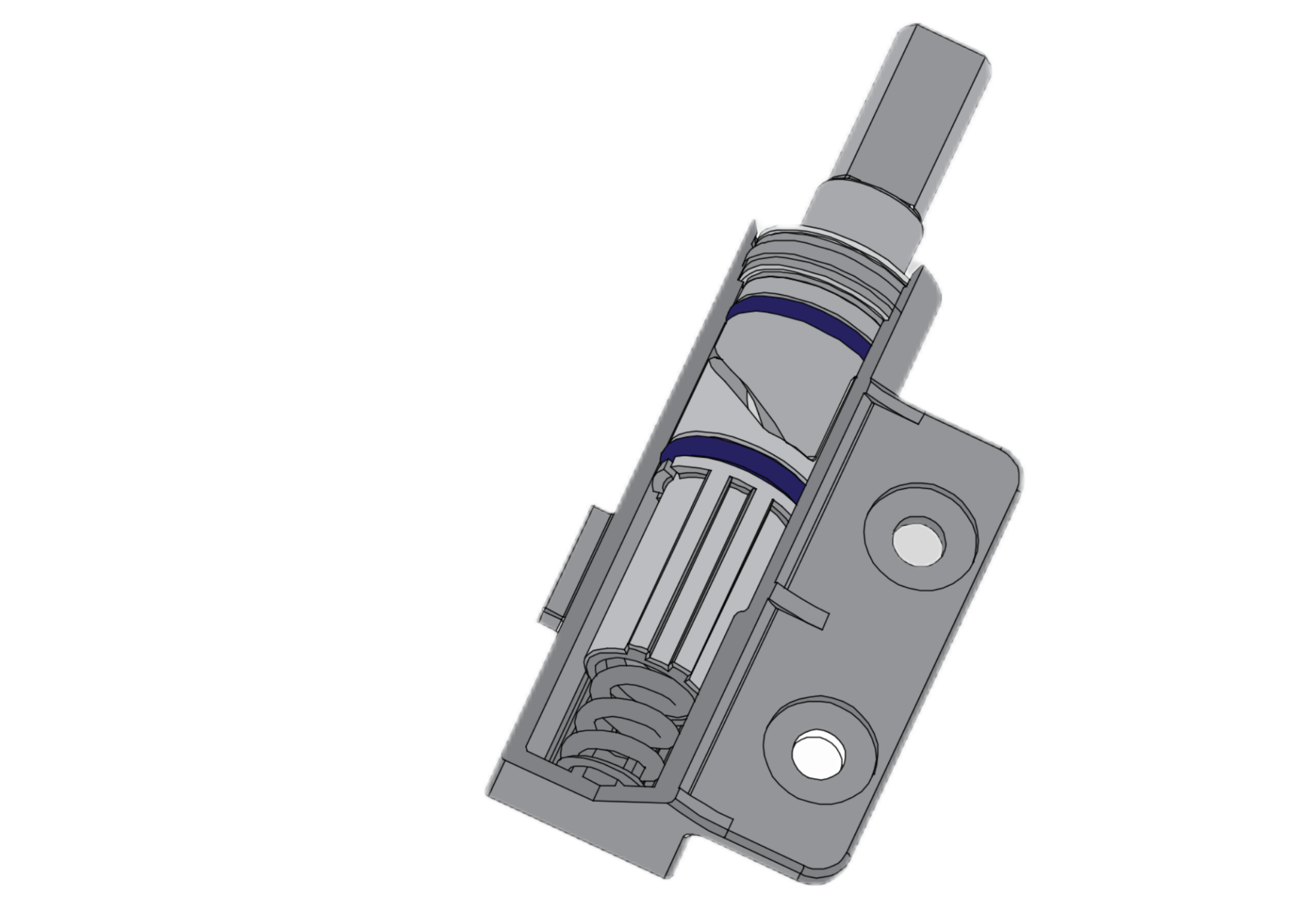
Spiral-Linear Damper
Outline
- 1How Rotary Damper work?
- 2Rotary Damper Structure Feature
- 3Rotary damper selection guide
- 4Rotary Damper Torque Factors
- 5Common Material Used In Rotary Dampers
- 6Rotary Damper Application
How rotary damper works?
Limited Angle Damper(Vane Damper)
https://youtube.com/watch?v=wY_FMS-NTsU%3Fcontrols%3D1%26rel%3D0%26playsinline%3D0%26modestbranding%3D0%26autoplay%3D0%26enablejsapi%3D1%26origin%3Dhttps%253A%252F%252Fpeirdamper.com%26widgetid%3D1%26forigin%3Dhttps%253A%252F%252Fpeirdamper.com%252Fwhat-is-rotary-damper-2%252F%26aoriginsup%3D1%26gporigin%3Dhttps%253A%252F%252Fpeirdamper.com%252Fknowledge%252F%26vf%3D1
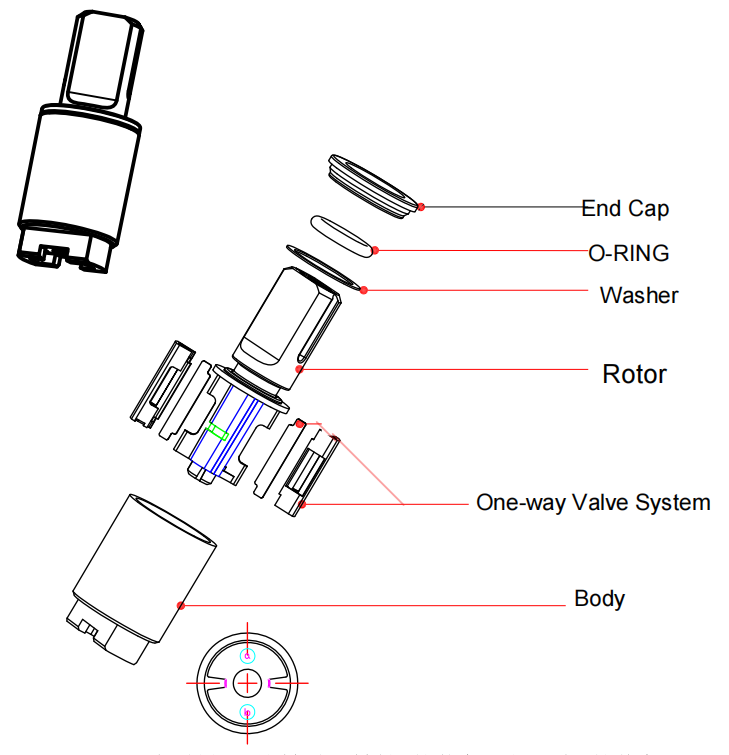
Vane dampers’ working angle is normally 110 degrees. Depending on the application, they can be different sizes and materials. The silicone oil inside is the medium that generates the torque. And the one-way valve system allows the toilet seat to be opened easily, but closed with considerable resistance.
Exploded View
Torque Variation in Limited-Angle Damper
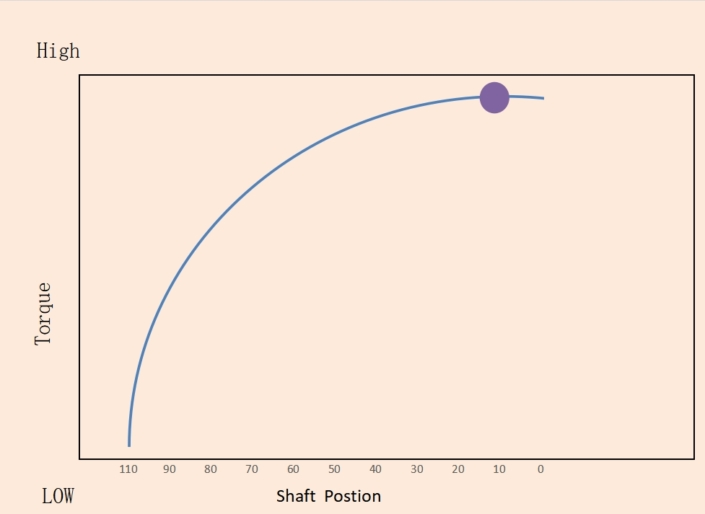
The torque value changes at each angle, reaching maximum torque at 0 degrees. So you can see that the soft closing of a toilet seat is at a constant speed.
Infinite Angle Damper
https://youtube.com/watch?v=PjAktkAu4ZA%3Fcontrols%3D1%26rel%3D0%26playsinline%3D0%26modestbranding%3D0%26autoplay%3D0%26enablejsapi%3D1%26origin%3Dhttps%253A%252F%252Fpeirdamper.com%26widgetid%3D3%26forigin%3Dhttps%253A%252F%252Fpeirdamper.com%252Fwhat-is-rotary-damper-2%252F%26aoriginsup%3D1%26gporigin%3Dhttps%253A%252F%252Fpeirdamper.com%252Fknowledge%252F%26vf%3D1
Infinite angle dampers can rotate in a full circle. They can be different sizes and materials depending on the application.The infinite angle damper is normally bi-directional, i.e. it has resistance in both the clockwise and counter-clockwise directions, but can be made uni-directional by adding a one-way bearing.
Exploded View
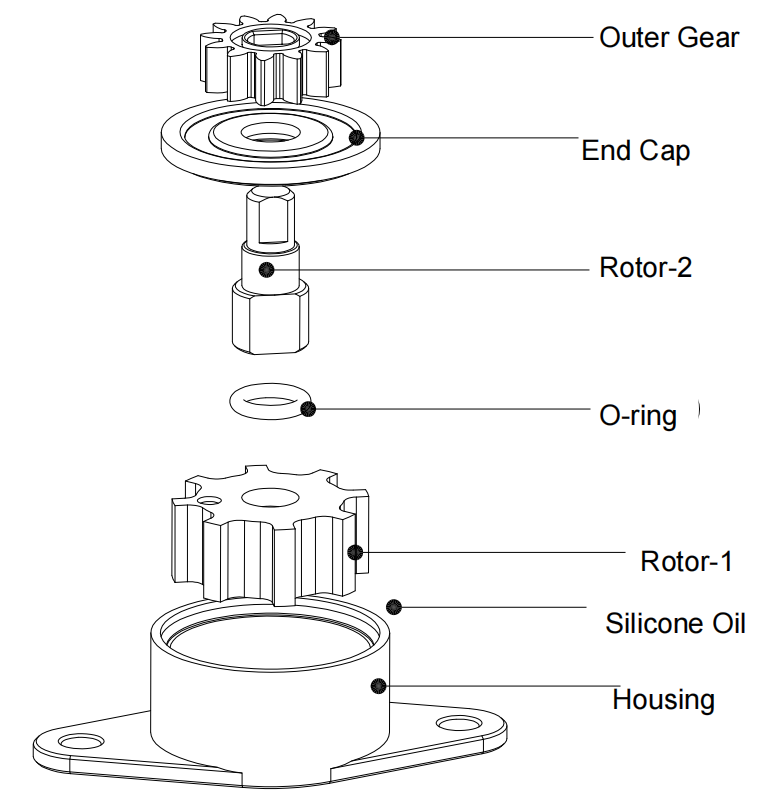
Consistent Torque in Infinite-Angle Damper
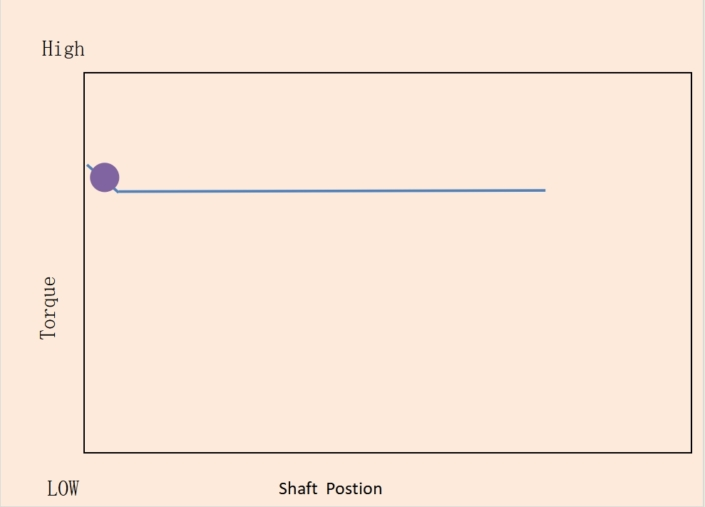
Differnet with a limited angle damper, the torque value of an infinite angle damper remains constant at any angle.
Rotary Damper Structure Feature
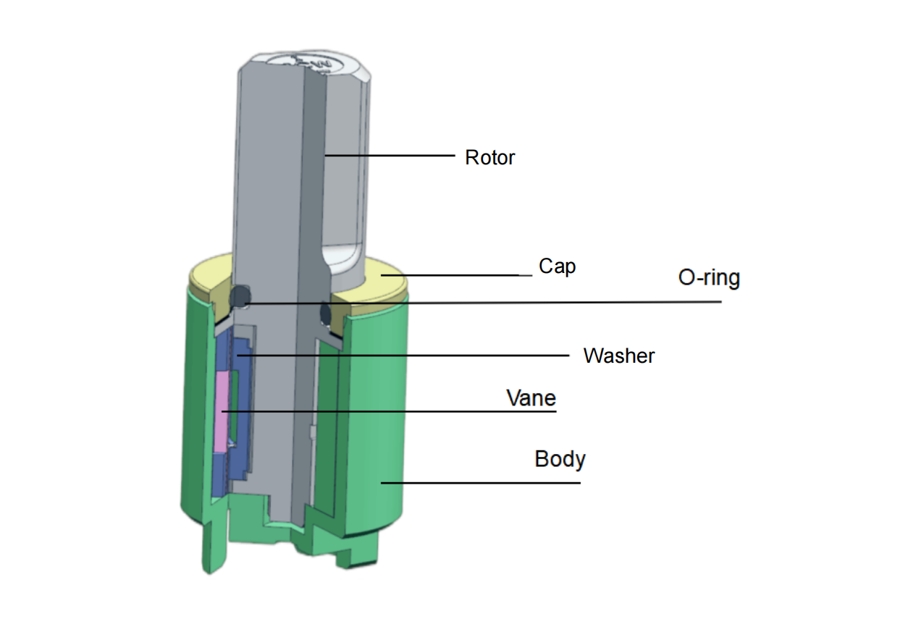
Vane Damper
Vane dampers operate by rotating attached vane along the rotor of rotation.
This movement compresses the silicone oil in the chamber, causing it to flow into the gap between the vane and the body.
The pressure of the silicone oil, combined with the vane area, generates resistance, creating a damping torque on the rotating rotor and vane.
*
Working Angle:
Typically used for rotations of less than 180°, vane dampers find applications in various products like lids (e.g., washing machines, toilets, trash cans).
Continuous Rotary Damper
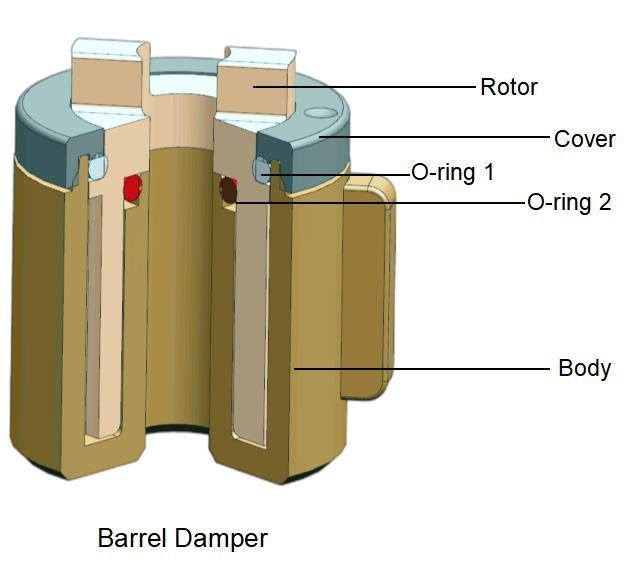
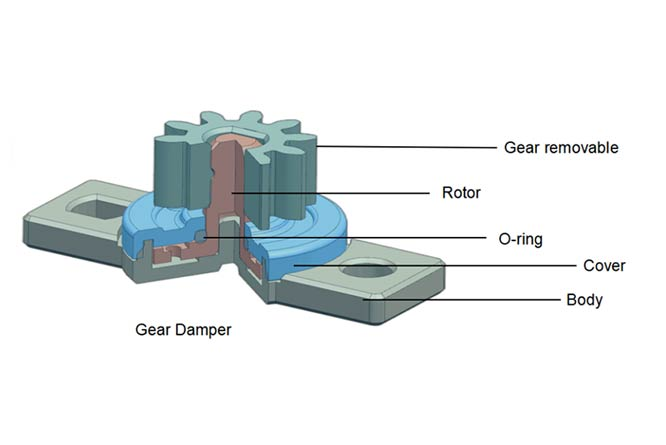
Continuous Rotary Damper (Including barrel damper, gear damper, disc damper)
Continuous rotary damper operates by rotating rotor.
* As the rotor moves, the body and cover forms a sealed oil chamber, allowing silicone oil to flow into the gap between the rotating rotor and the body.
* The viscosity of the silicone oil creates a consistent damping force during axis movement.
Working Angle:
This damper type is not restricted by rotation angles and is utilized in various rotary mechanisms.
It is often combined with springs in applications such as shades, screens, and blocking belts.
Rotary damper selection guide
When selecting a rotary damper for customer, engineer will consider the following key factors:
- Select by torque range or damping time:Matching the resistance level needed for the application. For example: Washing machine lid soft-close time requested 3-8 second.
- Select by movement :Once the optimum torque setting is achieved, the rotational damper should be selected according to the operation movement when closing a lid. Like Horitional, Vertical and so on.
- Select by mounting dimensions:Peir maintain more than 400 models including big high torque damper and small rotary damper. Talk to engineer directly to find the propoer model effectively.
- Select by Material and durability:As per Peir’s quality standards, rotary dampers are designed with a lifecycle ranging from 30,000 to 50,000 cycles, with variations among different models. In instances where high-torque dampers surpass 3N.m, the casing material comprises zinc alloy to augment durability. Conversely, for lower torque dampers, PBT is the preferred material due to its robustness and strength. In cases where customers stipulate extended lifecycles, interior components may integrate wear-resistant or high-temperature-resistant materials to meet these specifications.
- Select by Features:If customer has specific requirement on movement, for example the lid can stop at any angle and soft close from final 15° to 0 °, we can customerize with optimization plan.
- Application requirements:Specific use and environment temperature.
- Small Opening Angle Require Damping?Even at a small opening angle—such as 20°—a lid can still close gently under its own weight when released, proving that the built-in damper remains active and effective throughout the entire range of motion.
Rotary Damper Customize Solution
Request a solution from PEIR—click to follow the engineering guideline.
Rotary Damper Torque Factors
- 1Oil viscosity:Thicker oil generates more resistance when passing through the damper’s pathways, leading to higher torque values, whereas thinner oil offers less resistance and results in lower torque. This principle enables the adjustment of damping effects by changing the viscosity of the oil to suit specific application needs.
- 2Clearance between the rotor inside the rotational damper and outer casing:The space determines how oil flows through it, which in turn affects the damper’s resistance level.
- 3Size of the damper:A larger oil chamber allows for more fluid flow control, leading to different torque capabilities.
- 4Material:Zinc alloy and steel are commonly used in high torque dampers, but for low torque dampers, plastic (PBT, PA, or POM) can also fulfill the task. Adding glass fiber to plastics also increases the strength of the material.
Besides the factors mentioned above influence the damper working.
Also the oil viscosity inside the damper determines its torque, which varies with temperature—higher temperatures lead to lower torque, and vice versa.
The damper’s torque also increases with rotation speed.
That is why Engineers designing a damper need to know the application’s working temperature and required torque to tailor the damper’s performance. This ensures the damper provides the right amount of resistance for its specific use, efficiently dissipating kinetic energy as heat.
Common materials used in rotary dampers
Rotary dampers are made from strong plastics or metals, with oil viscosity and precise construction affecting their performance.
They’re chosen for specific uses, like toilet seats, where materials must resist detergents, leading to the selection of PBT and zinc alloy for durability and strength.
Material choice is key, considering the environment, cost, and how long the product is expected to last, ensuring the damper works effectively for everything from electronics to heavy machinery.
Rotary Damper Application
As rotary dampers are easy to integrate, they apply to various products.
Peir offers an extensive range of products, including 400+ models, such as rotary dampers, soft-close hinges, friction hinges, friction dampers, gear dampers, disk dampers, and more. Diverse product categories cater to a wide range of applications across various sectors, including automotive, home appliances, and furniture. This comprehensive lineup showcases Peir’s ability to fulfill a broad spectrum of customer needs across different industries.
- Sanitary: toilet seat & cover and shower door hinge
- Home appliances: refrigerator and washer/dryer, ranges, coffee machine, soda machine
- Automotive: handles, fuel doors, glasses holder, cup holder, EV charger
- Furniture: kitchen cabinets, shutter
- Piano covers, vending machine flaps, air filter covers, and printers