
- 1Oil viscosity:Thicker oil generates more resistance when passing through the damper’s pathways, leading to higher torque values, whereas thinner oil offers less resistance and results in lower torque. This principle enables the adjustment of damping effects by changing the viscosity of the oil to suit specific application needs.
- 2Clearance between the rotor inside the rotational damper and outer casing:The space determines how oil flows through it, which in turn affects the damper’s resistance level.
- 3Size of the damper:A larger oil chamber allows for more fluid flow control, leading to different torque capabilities.
- 4Material:Zinc alloy and steel are commonly used in high torque dampers, but for low torque dampers, plastic (PBT, PA, or POM) can also fulfill the task. Adding glass fiber to plastics also increases the strength of the material.
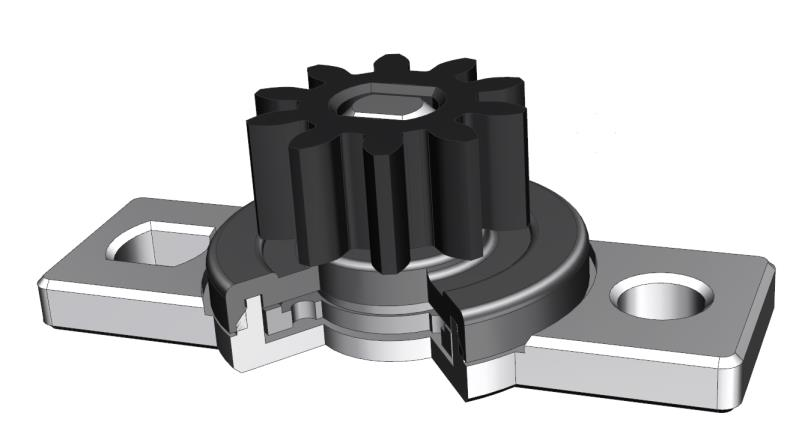
Besides the factors mentioned above influence the damper working.
Also the oil viscosity inside the damper determines its torque, which varies with temperature—higher temperatures lead to lower torque, and vice versa.
The damper’s torque also increases with rotation speed.
That is why Engineers designing a damper need to know the application’s working temperature and required torque to tailor the damper’s performance. This ensures the damper provides the right amount of resistance for its specific use, efficiently dissipating kinetic energy as heat.